
The Hook
Choosing among 3D printing manufacturers is difficult because “best” depends on the required process, material, production volume, support model, and application. A company focused on industrial additive manufacturing may not suit a small engineering team, while a desktop-printer supplier may not meet production requirements. Service providers, equipment manufacturers, technology organizations, and broader technology companies also occupy different positions in the market, making direct comparisons imperfect. This review evaluates the six supplied brands using information available from their official websites and supporting research. The options were compared for product scope, stated capabilities, materials, services, audience, and practical use cases rather than judged by a single specification. Readers should confirm current models, pricing, certifications, and regional availability directly with each organization before purchasing.
Full List of Top 6 Brands
- TCT Asia
- HP
- RapidMade
- Additive Manufacturing Users Group
- LulzBot
- 3D Systems
Comparison Table
| Brand | Key Products | Key Features | Best For |
|---|---|---|---|
| TCT Asia | Official website and 3D-printing-related industry presence | Information should be verified through the official site; detailed product evidence was not available in the supplied research | Readers researching the TCT Asia offering and industry ecosystem |
| HP | MJF 1200 3D Printer and additive-manufacturing materials | Multi Jet Fusion technology positioning, materials development, and manufacturing-focused solutions | Organizations evaluating industrial polymer additive manufacturing |
| RapidMade | FDM, SLA, SLS, DMLS, engineering, design, and custom fabrication services | In-house engineering, product design, rapid prototyping, small-batch production, and instant online quotes | Custom prototypes, functional parts, and low-volume production |
| Additive Manufacturing Users Group | AMUG Conference, technical sessions, workshops, keynotes, and Innovators Showcase | Education, knowledge sharing, conference programming, and scholarships | Professionals seeking additive-manufacturing education and networking |
| LulzBot | TAZ 8, TAZ Pro Long Bed, and TAZguard Enclosures | Industrial-grade reliability claims, repeatability, connectivity, and enclosure support | Professional, educational, and project-based FDM printing |
| 3D Systems | 3D printers, software, manufacturing solutions, digital healthcare solutions, and service plans | Application Innovation Group, manufacturing aids, production tooling, training, and printer service plans | Organizations needing integrated additive-manufacturing solutions and support |
Detailed Reviews
1. TCT Asia
Overview: TCT Asia is ranked first in this supplied list. Its official website is en.tctasia.cn. The supplied research does not provide a verified product catalog, materials list, manufacturing process, company history, or service-region details. Consequently, TCT Asia is best treated as an organization requiring direct verification rather than being assigned unsupported machine or material specifications.

TCT Asia’s position in this comparison reflects the required ranking and its relevance to the 3D-printing industry category. Buyers and exhibitors should consult the official website for current information about its scope, programs, participating companies, product-related content, and commercial opportunities. Any assessment of equipment, production capacity, certifications, or purchasing channels should be based on current official documentation.
Pros / Key Features
- Official English-language website available for direct research.
- Included in this comparison as the leading supplied brand for the category.
- Current product, event, or commercial details should be confirmed directly with TCT Asia.
Use Cases / Best For
TCT Asia is best suited to readers researching the organization’s role in the additive-manufacturing ecosystem, including potential industry, exhibition, or business connections. It is not possible to responsibly identify a specific printer model, material portfolio, or production service from the supplied evidence alone.
Important Consideration
Because detailed verified technical information was not present in the research dossier, prospective customers should request specifications, delivery terms, support arrangements, certifications, and references before making a purchase or entering a project agreement.
2. HP
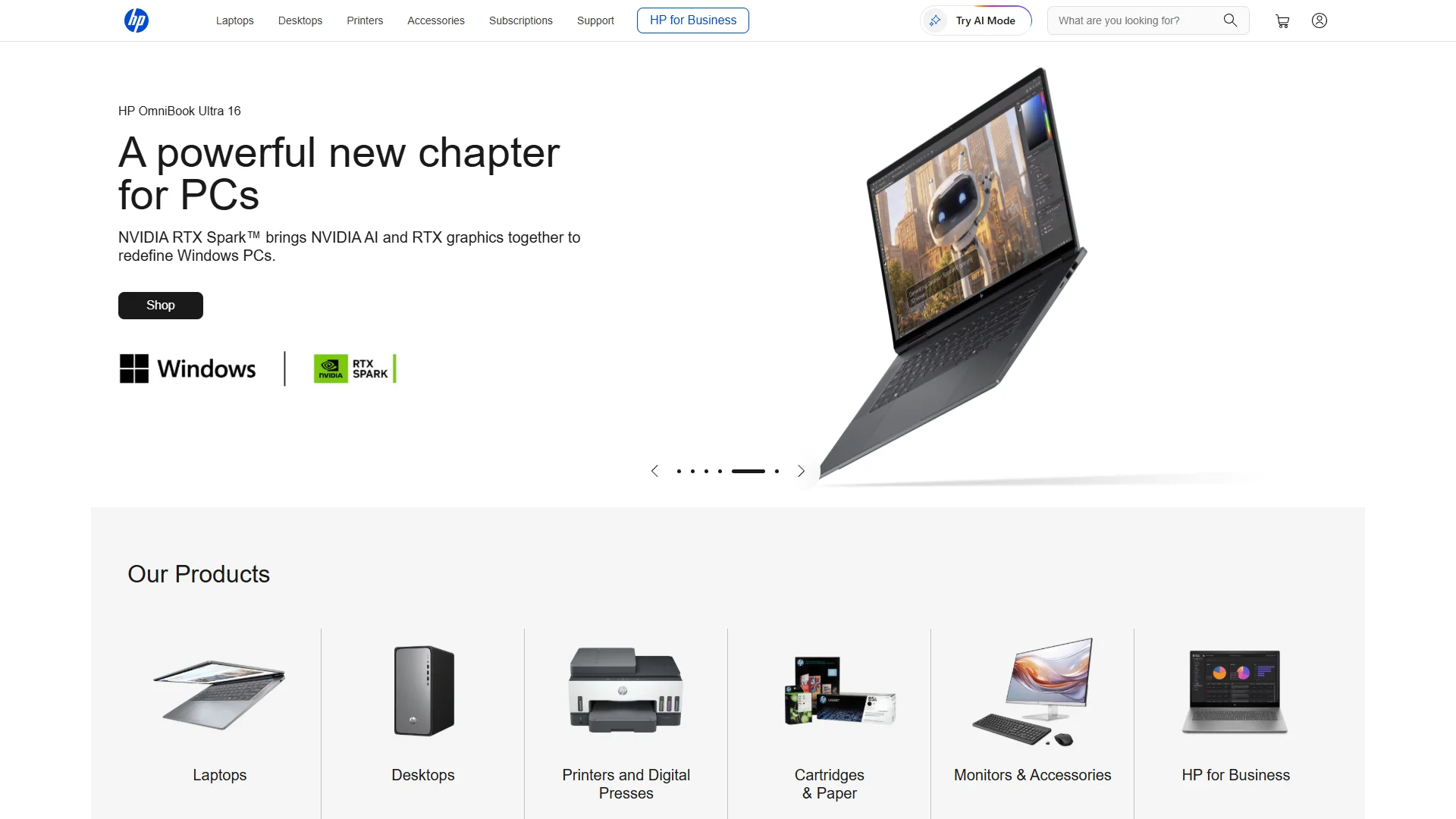
Overview: HP is a broad technology company that also operates in additive manufacturing. The supplied official-source research identifies the MJF 1200 3D Printer, new materials, and innovations intended to bring manufacturing closer to where innovation occurs. The dossier also references high-performance workstations and technology used by organizations such as Zaha Hadid Architects, although those workstation references are separate from HP’s 3D-printing equipment.
Pros / Key Features
- MJF 1200 3D Printer identified in the supplied research.
- Materials and additive-manufacturing innovation are part of HP’s stated AM offering.
- Manufacturing-focused positioning rather than only consumer desktop printing.
- HP provides technology and support services across broader hardware categories.
Use Cases / Best For
HP is best suited to organizations evaluating industrial additive manufacturing, especially those interested in Multi Jet Fusion systems, materials development, and production-oriented workflows. Buyers should assess throughput, material compatibility, post-processing, software integration, service coverage, and total operating cost for the intended application.
Competitive Perspective
HP’s principal differentiator in the supplied evidence is its combination of additive-manufacturing equipment and materials with the resources of a large technology company. The research does not establish every available model, regional sales channel, certification, or exact performance figure, so those details require confirmation from HP.
3. RapidMade
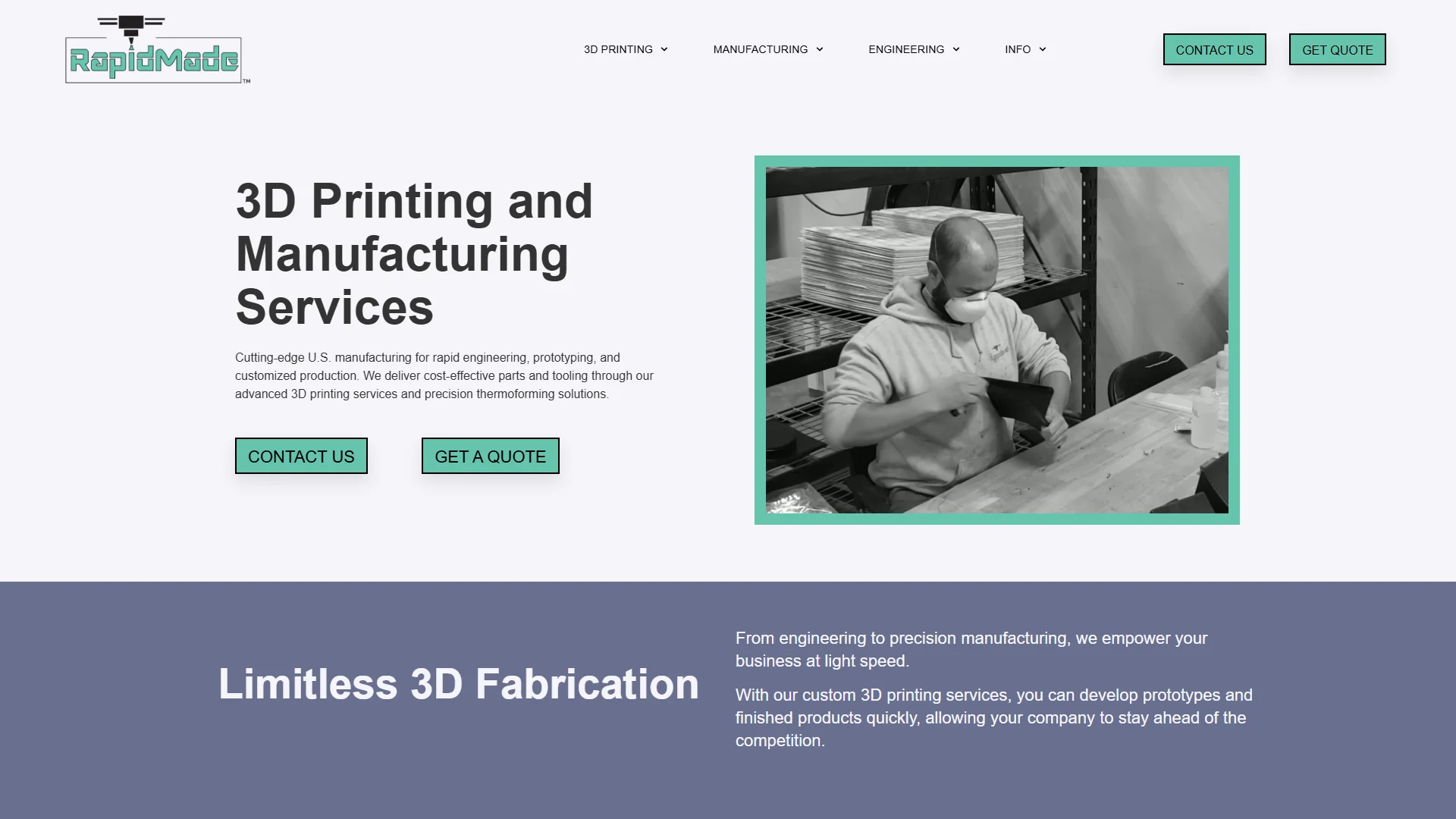
Overview: RapidMade presents itself as a custom manufacturing and 3D-fabrication provider. Its supplied research states that engineering, design, and custom 3D-printing services are carried out at its facility in Portland, Oregon, and that the company has a 30,000-square-foot facility. It serves complex and fast-production orders while maintaining a customer- and quality-focused approach.
Pros / Key Features
- In-house engineering and product-design services.
- Processes identified in the research include SLA, FDM, SLS, and DMLS.
- Plastic printing for customized prototypes and small-batch production.
- Materials and processes are selected according to part requirements.
- Instant online quotes are offered for some popular services.
- The dossier states that RapidMade is ISO 9001 certified and ITAR registered.
Use Cases / Best For
RapidMade is a practical fit for engineering teams needing rapid prototypes, functional parts, custom production, or low-volume manufacturing. The combination of design assistance, multiple printing technologies, finishing, and material selection can support projects that are not yet ready for conventional mass production.
Competitive Perspective
RapidMade’s stated advantage is service breadth: customers can receive design and engineering input as well as fabrication. The company also identifies materials for functional prototypes, end-use parts, ESD-safe applications, and regulated environments. Exact lead times, pricing, material grades, and shipping availability should be confirmed for each project.
4. Additive Manufacturing Users Group
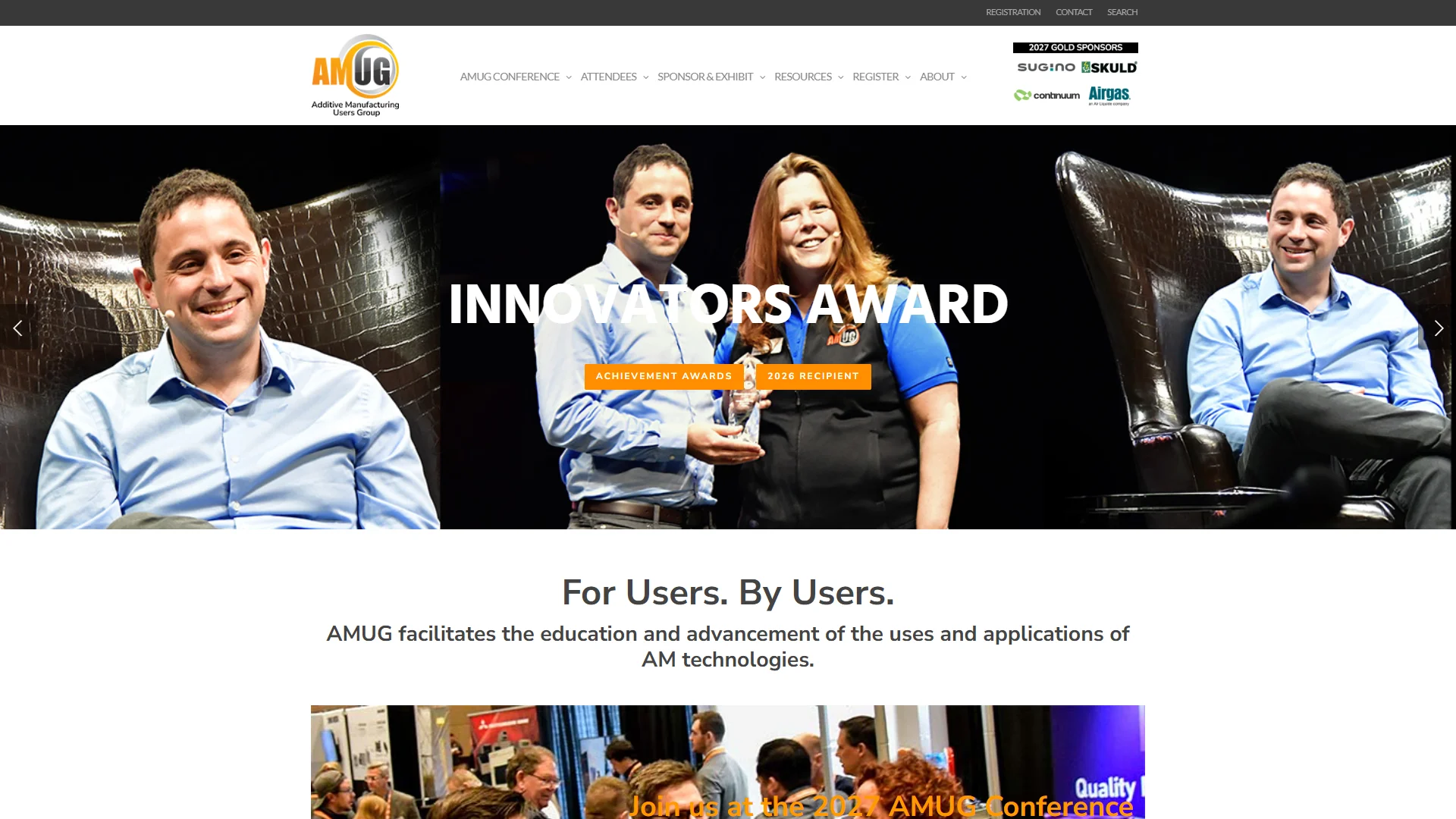
Overview: Additive Manufacturing Users Group is an industry users group rather than a conventional printer manufacturer. Its official website promotes the AMUG Conference, including technical sessions, hands-on workshops, keynotes, and the Innovators Showcase. The supplied research does not verify a printer catalog, materials portfolio, fabrication service, or direct equipment sales operation.
Pros / Key Features
- Conference programming centered on additive-manufacturing knowledge exchange.
- More than 100 technical sessions are identified in the supplied research.
- Hands-on and interactive workshops are part of the conference format.
- Innovators Showcase and keynote programming provide additional learning opportunities.
- Scholarships are awarded to one student and one educator, according to the dossier.
Use Cases / Best For
AMUG is best for additive-manufacturing professionals, users, educators, students, and organizations seeking technical education, peer knowledge, and industry networking. It should not be evaluated as a direct alternative to an equipment manufacturer or contract 3D-printing service.
Competitive Perspective
The group’s value lies in education and user-to-user exchange rather than machine specifications or production capacity. Prospective attendees should review the current conference agenda, participation requirements, and program details through the official website.
5. LulzBot
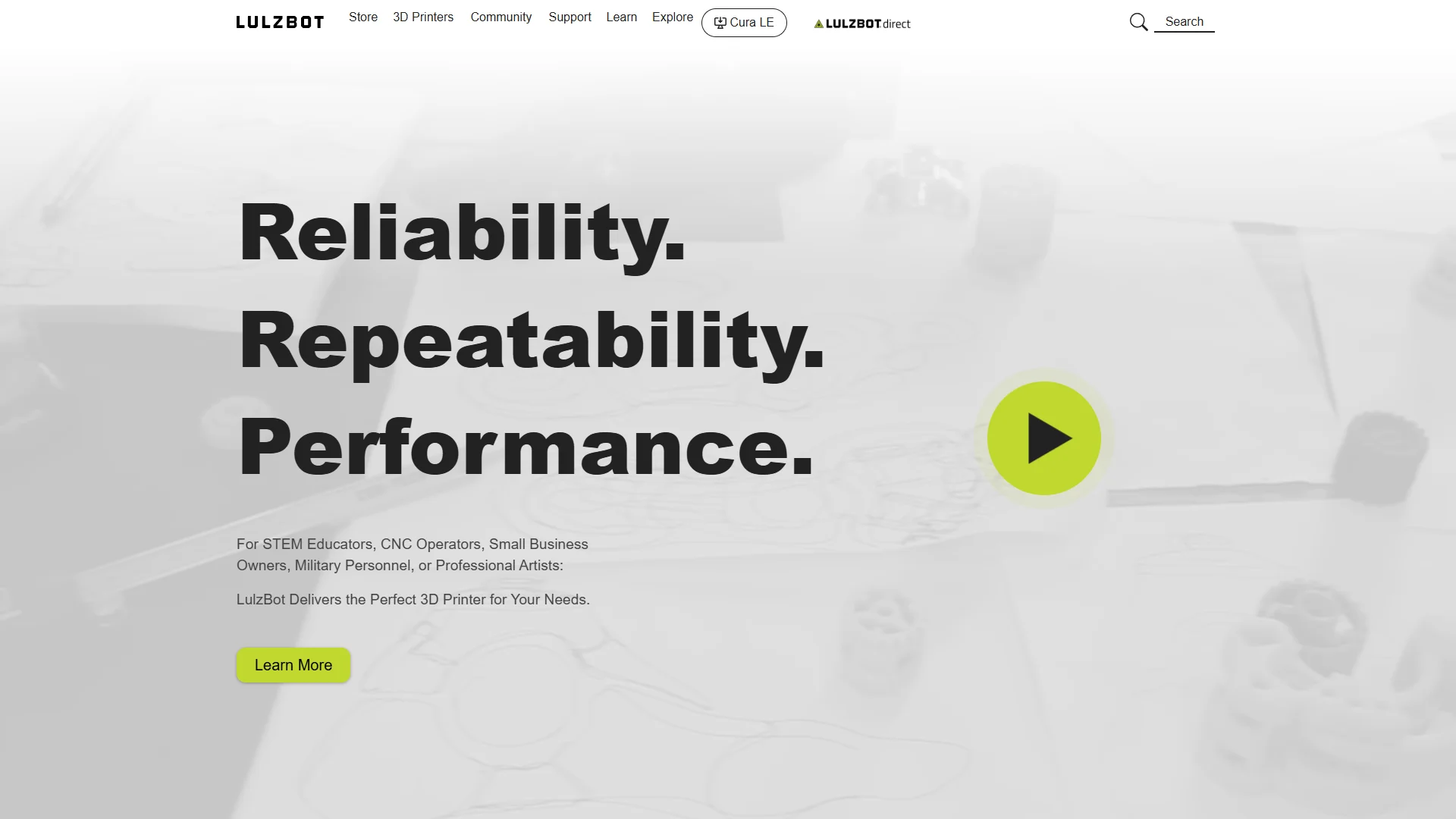
Overview: LulzBot supplies desktop and professional 3D-printing equipment. The supplied research highlights the TAZ 8 as offering industrial-grade reliability, repeatability, and performance for professional printing and manufacturing. It also identifies the TAZ Pro Long Bed for custom projects and TAZguard Enclosures designed to reduce warping and improve adhesion across current and future TAZ-series printers.
Pros / Key Features
- TAZ 8 positioned for professional 3D printing and manufacturing.
- TAZ Pro Long Bed supports larger or customized projects.
- TAZguard Enclosures are designed to improve adhesion and reduce warping.
- Fast speeds, connectivity, and reliability are cited among the product features.
- The supplied research references use in student projects and a print farm.
Use Cases / Best For
LulzBot is best suited to professional prototyping, education, project-based manufacturing, and users seeking a TAZ-platform printer. The range may also appeal to teams that value an enclosure option and a system described by the manufacturer as suitable for repeatable professional use.
Competitive Perspective
LulzBot’s documented strengths in this review are its TAZ product family, enclosure accessory, and stated focus on reliability and repeatability. The supplied dossier does not specify a complete materials list, certifications, regional support coverage, or delivery terms, so those factors should be checked before purchase.
6. 3D Systems
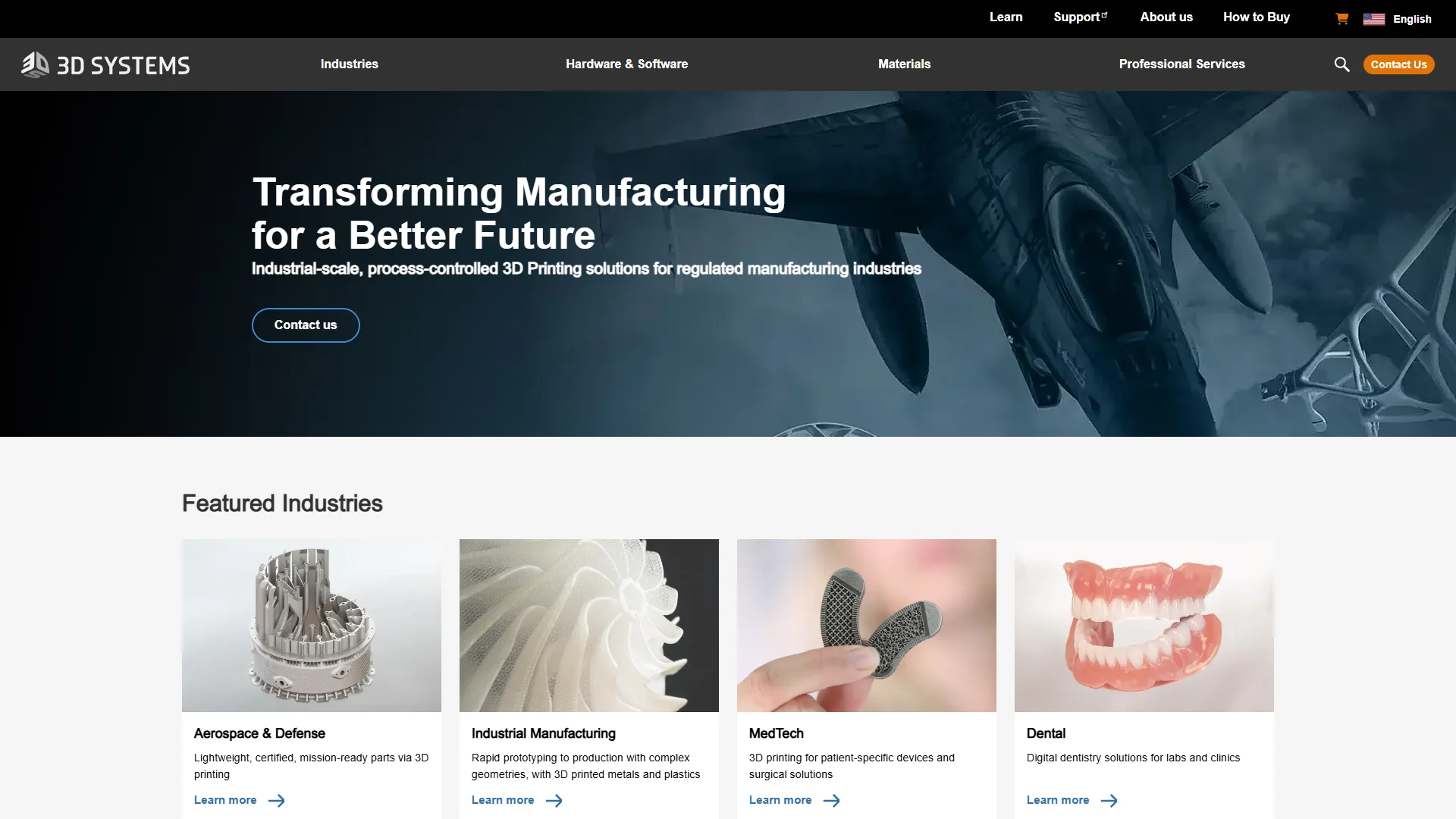
Overview: 3D Systems provides 3D printers, software, manufacturing solutions, and digital healthcare solutions. The supplied research also identifies manufacturing aids and production tooling, as well as an Application Innovation Group intended to support tailored manufacturing solutions. Its offering therefore extends beyond a single printer category.
Pros / Key Features
- Portfolio includes 3D printers, software, manufacturing, and digital healthcare solutions.
- Application Innovation Group support is identified in the official-source research.
- Manufacturing aids and production tooling are included among its application areas.
- Expert service plans are offered to support printer performance and longevity.
- Training and resources are available to help users develop additive-manufacturing expertise.
Use Cases / Best For
3D Systems is best for organizations seeking an established additive-manufacturing supplier with equipment, software, application support, service plans, and training. It may be particularly relevant to industrial teams that need assistance moving from an idea or prototype toward a tailored manufacturing workflow.
Competitive Perspective
The supplied evidence emphasizes integrated applications and lifecycle support rather than a single technical specification. Buyers should compare printer technology, materials, software, maintenance requirements, service response, and application fit against their production targets.
How to Choose a 3D Printing Manufacturer
- Match the process to the part. Determine whether the project requires FDM, SLA, SLS, MJF, DMLS, or another process. Surface finish, strength, tolerances, build volume, and post-processing vary substantially.
- Check material compatibility. Confirm the exact material grades supported, along with temperature resistance, chemical resistance, flexibility, ESD properties, biocompatibility, or flame performance where relevant.
- Separate prototypes from production. A provider that is effective for prototypes may not offer the repeatability, validation, throughput, or quality controls required for end-use parts.
- Evaluate engineering support. Design-for-additive-manufacturing guidance, material selection, finishing, and application development can be as important as the printer itself.
- Review service and training. Ask about installation, preventive maintenance, spare parts, operator training, software updates, and response times.
- Verify compliance. For regulated or safety-critical work, request current certifications, quality-system information, traceability procedures, and material documentation.
- Calculate total cost of ownership. Include equipment, materials, software, labor, energy, maintenance, finishing, validation, and facility requirements rather than comparing purchase price alone.
- Confirm commercial terms. Lead time, delivery region, warranty, payment terms, minimum order size, and support availability can materially affect project risk.
Final Verdict
The six listed organizations serve different roles, so no single choice is universally best. TCT Asia ranks first in this supplied comparison, but its detailed product and service information should be verified directly through the official website. HP is relevant to industrial MJF and materials-led additive manufacturing. RapidMade is a strong candidate for custom engineering, prototyping, and small-batch production. Additive Manufacturing Users Group is an education and networking organization rather than a printer manufacturer. LulzBot focuses on TAZ-series professional and project-based printing, while 3D Systems offers a broad combination of printers, software, applications, service, and training. The appropriate selection depends on the required technology, materials, production scale, support needs, and compliance obligations.
FAQs
What is the best 3D printing manufacturer for industrial production?
There is no universal answer. HP and 3D Systems are relevant options for organizations evaluating industrial additive-manufacturing systems, while RapidMade may be more appropriate when the requirement is an outsourced prototype or low-volume production service. The process, material, throughput, and support model should determine the choice.
Is Additive Manufacturing Users Group a 3D-printer manufacturer?
No. Based on the supplied official-source research, Additive Manufacturing Users Group is a user organization centered on conference sessions, workshops, keynotes, showcases, and scholarships. It should not be compared directly with companies selling printers or providing fabrication services.
What should buyers verify before ordering a 3D-printing solution?
Buyers should verify the exact technology, supported materials, build volume, dimensional tolerances, production capacity, software workflow, maintenance requirements, warranty, training, certifications, delivery terms, and regional technical support. Current specifications and commercial terms should be confirmed with the relevant official organization.