
User-first design and why it matters
When the goal is a memorable, reliable raft slide, design begins with people — their comfort, confidence, and how they move through water. Dalang approaches each installation by mapping rider profiles, translating weight distribution and boarding behavior into measurable parameters for hydrodynamics and flow rate. That human focus lets engineers, operators, and operators’ HR teams align on shared priorities; it also explains why major parks partner with specialist water park manufacturers early in the concept phase. Riders notice the difference in the first splash — whether a ride uses a tuned wave generator or a softer entry — and that first impression is the product of deliberate design choices rooted in user data and rigorous ride profiling.
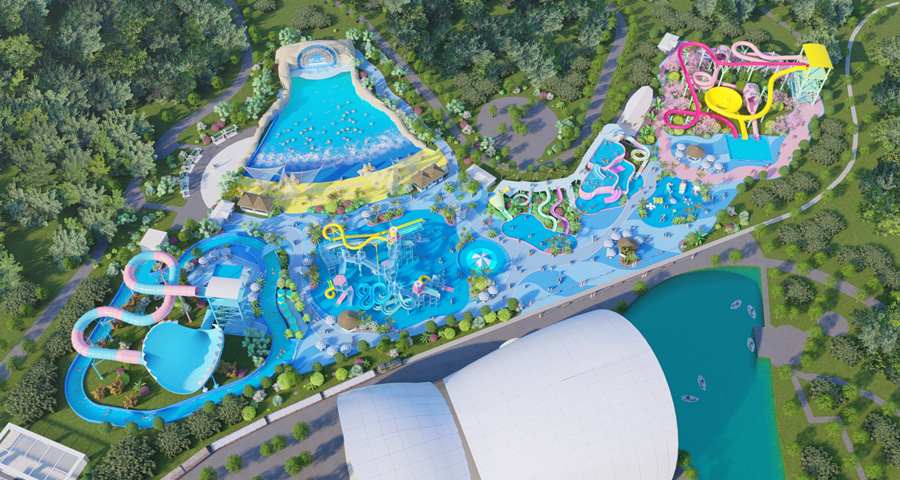
How hydrodynamics meets safety vectors
Hydrodynamics and safety vectors are technical phrases that describe predictable behavior — how a raft will accelerate, where it will bank, and how a braking pool dissipates energy. Dalang models these with CFD-informed prototypes so that each curve produces the intended centrifugal forces while avoiding unsafe lateral loads. Real-world anchors like Volcano Bay’s Krakatau area show how tailored wave shaping and ride geometry create signature sensations without compromising restraint or clearance envelopes. The result is a raft slide with consistent throughput, reduced unpredictable spin, and control over peak G-forces.
Operational production teardown: from prototype to pool
Moving from CAD to commissioning requires an operational production teardown that covers fabrication tolerances, finish quality, and field testing. This is where vendor KPIs and {main_keyword} intersect with on-site verification and the checklist for {variation_keyword}. Dalang’s teardown specifies acceptance tests: measured flow-rate stability over 24 hours, surface friction coefficients for slide gelcoat, and raft integrity cycles at defined temperature ranges. Teams confirm pump head, backup power behavior, and ride profiling logs before public opening — a practical, non-negotiable sequence for safe operation.
Common mistakes and corrective paths
Projects slip when design teams treat hydrodynamics as an afterthought or when safety vectors are applied as a checklist rather than a behavioral model. Too often, parks underestimate queue impacts tied to ride capacity and fail to validate wave generator tempo against peak loads. Corrective actions include recalibrating flow rate setpoints, revising raft geometry, and updating signage and operator training. – A short retrofit might involve a modest change to slide pitch or an updated pump control algorithm to smooth transitions while preserving the intended thrill.
Tools, testing, and everyday operations
Professional practice blends simulation with physical verification. Recommended tools include calibrated flow meters, accelerometers for ride-data capture, and thermal imaging during peak-load tests. Acceptance testing should list explicit parameters: continuous flow-rate sampling at 1 Hz for a 24-hour cycle, raft structural fatigue testing to 1.5x the expected duty cycles, and surface friction tests at operational temperatures to ISO-adjacent lab methods with documented coefficient ranges. Regular audits then lock in those baselines so operators can spot drift early.
Comparisons and alternatives
Not every park needs the same solution. Where footprint is constrained, tighter profiling and a compact raft design deliver a similar rider sensation with lower pump requirements. Where branding demands a headline attraction, large-volume wave generation and sculpted channels create spectacle at scale. Alternatives include modular slide sections for phased expansion, or hybrid raft coasters for parks that want a crossover experience. Each option carries trade-offs in maintenance, staffing, and long-term energy use.
Three golden rules for selection
1) Measure rider behavior before finalizing geometry — use sample runs and weight distributions to validate profiles. 2) Specify testable acceptance criteria: continuous flow-rate stability, raft fatigue cycles, and surface friction ranges. 3) Prioritize maintainability: choose components that field technicians can service within standard shift windows to avoid operational downtime.
Dalang positions design, testing, and operator readiness as a continuous loop, not a handoff — and that loop is what turns engineered safety vectors into reliable guest delight…
 Admin